Tuesday, November 24, 2009

Bill Of Sale And Manitoba

Rosolino

When someone goes away, I mean forever, also something inside of us. Last night I received a message saying "a question of our friendship is dead ... Rosolo. It 's true friendships also feed on events, places and people, and when something is lacking the same does not diminish but certainly suffer in the more literal meaning of the term. The people we know do not just be mere scenery of our lives but become active players in our personal tragicomedy and when an actor leaves the whole story suffers and sometimes even take new paths. There are events that, without noticing it, change the course of our lives.
Rosolo in its own way had it changed, life, long ago when he accepted me and Franz, in the room of his restaurant, one of the few that still has the right to call it in Italy and worldwide, and as travelers who are a refuge after a day and a night walk, we felt we were finally at home, or something like that, right now. Few fuss, cheap wine and sandwiches well padded, it did not seem real. Then the difference is the people and slowly from eating and drinking was passed in a natural manner, laughing and joking with the customers and Rosolo osteria like us to become friends with everyone, to gain a small family with alternative Rosolo head of household. How many times
I fled to him for a bit of that peace 'campagnola made of wine glasses and leaning against the counter talking, running from the labor market and the company so well dressed and so, so ignorant and plastic, to laugh, joking, talking about politician, sports and news, listen to stories, a bit 'happy and a bit' sad, friendship, fights, colossal drinks, lunches and dinners, trips, people.
Moments that I have here with me and that I will always carry around the world wherever I go.

Sunday may have started a new change, but that matters little now, I just know if I have given something to bring brown on the site where it went or simply hold on while he was still alive. Who knows.

Monday, November 23, 2009

Kamehasutra Dbz Streaming

The crucifix and the roots of Europe rationalistic

Christ on the cross is a symbol, first of all, and the etymology of the word, from the greek σύμβολον súmbolon or "put together", finds its deepest meaning. We might quibble about the meaning long religious, political, psychological and social, however, without finding the focal point of the matter. The cross is the connection between two entities: religion and humanity. The cross is the visual symbol, a warning imprinted in various shapes and colors on a wall, to remind the Catholic Christian faith. It is a warning not to forget. There are various ways to live spirituality and the search for the mystical and that is why the cross is there to remind us how we should convey the irrational.
Jesus of Nazareth was a man, a preacher jew, who lived two thousand years ago in the Roman province of Judea. Historical chronicles of the time we do not talk about him and yet his story and his life was so important to the people of Europe, that history with a capital marked the birth of his second which is the central point. Everything happened to us in the West, before or after Christ, and all this only on the basis of the Gospels: the four officers Mark, Matthew, Luke and John, plus a twenty apocryphal between hypothetical and another dozen or lost.
He died on the cross, Jesus of Nazareth , technically killed by the Romans, although the blame was given to the Jews, the Romans themselves that three hundred years later, during the reign of Constantine I (Licinio and ), in a move more political than spiritual stop the persecution against Christians and officially elect as the Messiah, the son of God, which word would lead among men during his short life. And on the basis of the Gospels, the council after council from Nicaea, presided over by Constantine I (image shown at the bottom left with the Fathers of the First Council of Nicaea that show I think, at the center, the Emperor), later, the clergy, the men voted to him, first built a religion, made up of warnings and rules of behavior derived from the word of Jesus, choosing the agony of the same symbol as the most top of their beliefs, then a state with its king, his court, the its people, its army and its lands in Europe, in Italy, in Rome. Because the cult of Jesus, jew, he moved to Rome, electing as its capital? When Jesus said the phrase: "Upon this rock I will build my church 'Specify a location? And Peter having strolled to the Middle East always at his heels with the Romans ready to skin him, because fleeing took refuge in Rome itself (where Nero him the skin)? It was a political issue or simply a fatal attraction to the Eternal City? The Gospels and the Apostles gl'atti not specify anything about and course is not a problem they have set themselves the believers, it is certain that the Roman Catholic Church, once empowered with the Edict of Milan , not limited to direct, but he created a cult, as mentioned, a State, with the agreement of the imperial authorities, and also threw against everything around him and he could, even remotely , harms: first heresies, then the schism from the Orthodox Church, then the perennial battle against Islam ( the Christian Crusades, the holy war of Islam).
is then that Jesus on the cross becomes a "crucified" or the symbol back to him, a way of believing and also a power. The man Jesus nailed to the cross, his alleged human and divine nature, his agony is the symbol of the Catholic religion and its dominance over Europe and began continuously increased after the events just mentioned.
Now centuries later, someone will call traditional religious belief derived from the unclear facts described above. Avoid sinking further the nail on the head (it was never more apt metaphor) atteniamoci line etymological far kept trying to clarify what the word tradition, since its meaning can be varied, also depending on the areas where the apply: the word comes from Latin traditiònem which in turn derives from tradere = deliver, transmit. Tradition is what we receive and transmit . But the term tradition is also seen as habit and even though the two meanings can be in relation to their fundamental difference lies in the activity of transmission and liabilities of the latter. Transmit it requires action, the implementation of something which in turn must be led by an active subject to another subject to transpose and implement the same action in the same process that can last forever, until at least not in this virtuous circle is part of a taxpayer, and the concept of assets is important because then the person shall not easy carrier but is also involved in a process of direct action on the subject carried. The custom is rather passive, is the ' acceptance and putting into practice of stylistic pre , does not include activities of any kind except that of receiving, uncritically, and symbols that need to bind those who practice the custom to those who decide substance.
You can guess how well the Christian Catholic religion, like all other religions, is a type of traditional customary , those who practice it should not think they will decide they only asked to believe, and then to receive. It only remains to be seen whether in Europe there is also a tradition that goes back to the original meaning of the word itself, the concept of what active transmission. Of course there and is much older and deeper than any modern religion, popular in Europe or not, and is the rationalism. The rationalism (from the Latin ratio, "reason") is a philosophical movement based on the idea that human reason can in principle be the source of all knowledge ( cit. wikipedia . it ). Its origin dates back since the days of Hellenic philosophers: Thales of Miletus , for example, studied the proportions between the geometrical and astronomical and began to take this rational way of thinking in the field of philosophy ( cit.: wikipedia . it ). But Pythagoras, always around the sixth ac understood through numbers that was possbile explain a multitude of things.
But it was with the School of Athens that the rationalism taken concrete form. There is a beautiful fresco by Raphael in the Vatican, it depicts a scene in great many philosophers and mathematicians: Heraclitus, Euclid, Pythagoras, etc., in the middle Plato and Aristotle.


"Plato, painted with the likeness of Leonardo da Vinci, is holding in his hand Timaeus and his work points to the sky with a finger (indicating the supercelestial area to be beyond the sky where it counts the ideas), while Aristotle's Ethics and turns holding the palm of the hand toward the ground addressing the world's land and the will of man to study the natural world and to be in contact with it. "(source wikipedia . it )
dell'iperuranio Plato tells us, the irrational, the birth of thought in a place far away by us and, perhaps, close to a god, but Aristotle speaks of rationality, science, the infinite capacity of ' human intellect.
Perhaps at that moment in history, so well reported by Raphael, was born Rationalism became the short-term "tradition" in the first sense we have given. The rationalists fact, throughout the centuries to us, handed down their theories, studied and developed their skills in hundreds of different fields, for the most part very useful to man, from mathematics to medicine, geometry, art, biology to ' mechanical engineering and electronics.
personalities who have made a vehement development to human history over the centuries since Aristotle, philosophers such as Bacon , Hobbes, Leibniz, Spinoza, Montesquieu, Voltaire, Kant, scientists and artists like Michelangelo, Leonardo da Vinci, Galileo Galilei, Descartes, Newton until you reach Popper.
This is the true European tradition, and it is thanks to these champions of the mind that, along with hundreds of others who for reasons of space I can not speak out, have put their neurons for knowledge and have handed down their philosophy and their detected, even risking their lives ( Galileo Galilei tells you something?) if we in Europe today, believers or not, we go around in our beautiful toy car with air conditioning if we speak with a guy on the other side of the world walking down the street with a contraption in his hand, sitting in my office if I beat my fingers on little pieces of plastic placed on a large piece of plastic that attached to a wire that attaches who knows where, like magic, in the words I mind splashing all over the world and everyone can now read, and discover that I am speaking against the crucifix in schools this long preamble, and that everything was functional to the concept expressed so suddenly. Read
well, not against the crucifix, but against the crucifix in schools.
And if there is no clear because I'll clear: as explained above is not true that our European tradition is Catholic but rather rationalistic and there is no better place to consecration of it if not in school where all religious symbols should be banned on the walls and the giant Nobel prizes, the team photo of the scientists of CERN , writers, mathematicians, and these days, computer scientists who have changed our era. Everything else is
habit, not to be studied and then his place is not the school, but absorbed by those who feel the need, the need or simply believe it right.

The School is the place to be the triumph of reason and the irrational.

Tuesday, November 17, 2009

Should Thai Curry Be Watery


Our beautiful Italy makes no exceptions. When I think of my country I always do it with a mixture of pride and anger, sometimes I would go forever, leaving behind all the evil that runs through the boot but I'm afraid that after a while, I would have a deadly nostalgia (not the boot of evil). Basically everything I despair and this continual sense of insecurity. Because "a few rules, but still" said in Italy seems a blasphemy in the churchyard of St. Peter. We have no reference points and all that could not be more and vice versa. Everything is temporary and it was even our anthem, which became official on November 17 only four years ago. The "Song of the Italians' best known as Inno di Mameli Fratelli d'or Italy (which is a bit like calling "Breathe plan to make no noise" "Albatross" by Vasco Rossi) was written by Goffredo Mameli and music by Michele Novaro in 1847 . It 'a hymn Risorgimento created when Italy was still divided and oppressed Austro-Hungarian empire; may sound rhetorical, warlike in some parts, is unsuitable for the new state of united Italy, which was then the ultimate end of it, but it was October 12, 1946 adopted as the anthem of the new Italian state but provisional so much so that no article of the constitution has never spoken, and remained until 2005.
For over fifty years we have presented around the world in the ceremonies, parades, the matches of the national, the best Olympic ceremony took delivery and, with our beautiful hymn, because those who march down a weak is an idiot, but it had never been ufficilizzato even less legitimate. Consider that since 1970 every execution of the national anthem should be accompanied by that of the European anthem, Ode to Joy from Beethoven's Ninth Symphony, and the official in charge for years, unlike our own.
Perhaps this fact says much, much more than we think, as we are Italians, as we did in Italy and how, perhaps, we will be. Belli and incomplete, intended to make us always from the first salesman freagare passing on the street because they can not have points of reference only minimum and mere representation. and "Song of the Italians" , it's official now that a few years, it seems more of a swan song of the Italians and his words are full of intentions, character, belonging to sound awkward and grotesque, a good choice for spot.


Goffredo Mameli's tomb at Campo Verano Cemetery Monumental City - Rome

Sources: wikipedia.it; www.quirinale.it

Friday, November 13, 2009

Who's The Patron Saint Of Lymphoma

The Song of the Italians who invented the World Wide Web turned profits

E 'story well known that the World Wide Web or a the most-used services, along with the e-mail Internet was born Aug. 6, 1991, the day the British Computer Tim Berners - Lee, in actual permanent service at the Cern ( Conseil Européen pour the Recherche Nucléaire) in Geneva, the most important European physics laboratory, launched the service only final of exchanging data between two servers via a phone call. The idea was born a few years before he published the first website thus giving rise to the phenomenon of the triple W. The idea was born a couple of years ago in March 1989 when the same Tim presented a draft for the ' exchange of information , fast and convenient, among scientists. The project was evaluated interesting and then we all know what happened.

But not all know is that the CERN, April 30, 1993, decided to put the WWW in available to the public renouncing all copyright.

Maybe now those who work at CERN are thinking of what profits are private, they'll be thinking of the money making tycoons of porn, the telecom company , various google, Micorsoft , yahoo , facebook, ebay . Rivers of money have poured over all but about them, not even a plaque or a name on a street.

Or are thinking that, because of their choice, have impressed the largest acceleration the human evolutionary process. It's been a little less than twenty years after writing on the front page world wide web and now this tool, for better or for worse, is an integral part of our lives. We use it for work or leisure activities, to try information, and book your holidays, gl'amici communicate with, to laugh, to get a hit or play, they find. And even if 90% of the internet world is perfectly useless for evolutionary that 10% and further sufficient to change the world before our eyes. Only ten years ago when a friend of mine had gone to live in Brazil I lost sight of forever or it would remain the epistolary correspondence. Now I write with him, I talk, we exchange photos, impressions, opinions, whether in the office, at home or somewhere. The web of the WWW is now everywhere and its development so rapid, and the simultaneous development of the world, we owe it only to people who have ideals put before the earnings. People
so rare but fortunately exists, otherwise who knows where we land.
The first pages on the World Wide Web

Sources: wikipedia.it

Wednesday, November 11, 2009

Sending Mail From Philippines To Korea

The martyrs of Chicago

The first of May in 1886 was not the Labor Day, but that day the American unions in Chicago had organized a strike to demand the eight-hour working day, the battle won, and we received ... until recently. Two days later, on May 3, the strike was not yet finished and the strikers are met in front of the factory McCormick harvesters . There they were attacked without warning by the police in Chicago, the consequences were two killed and many wounded. The news spread rapidly among city workers, and some local anarchists distributed of leaflets urging workers to a garrison to Haymarket Square to protest against the behavior police, in their opinion, driven by interests, by inviting workers to seek justice.
And the garrison there was Haymarket Square in the rain, May 4, 1886, with the anarchist August Spies who spoke to the crowd to a chariot side of the road. course there were also the policemen in garrison. There are conflicting versions that from this point onwards the story are interwoven, some say that Spies, the speaker urged too vehemently the crowd, someone speaks of leaflets written with reactionary, someone mentions the initiative of the simple Police, we know only that it ordered the crowd to disperse and began marching in formation towards the speakers' wagon. At that moment a bomb flew against the line of policemen , landing near the policeman J. Mathias Degan, who died instantly. At that point the police opened fire on the crowd, injuring dozens of people and killing eleven, including seven officers hit by friendly fire. Many people refused to be treated in hospital for not hitting a stop and the police in retaliation. Eight people connected
directly or indirectly with the protest organizers and its anarchists were blamed for the death of Degan : August Spies , Albert Parsons, Adolph Fischer, George Engel , Louis Lingg, Michael Schwab, Samuel Fielden and Oscar Neebe . There was the process.
During the same was not brought any evidence connection between the defendants and the launch of the bomb, but the same were accused of complicity or of inciting a mysterious murderess to throw the bomb.
The jury gave verdicts of guilt for all eight defendants, with death sentences for seven of them.
At the conclusion of the appeals process Illinois Governor Richard James Oglesby commuted the death sentences of Fielden and Schwab to life imprisonment. On the eve of execution
Lingg committed suicide in his cell lit a cigar filled with dynamite and being literally explode their faces. Agony for several hours before dying. Gl'altri four Spies, Parsons , Fischer and Engel were hanged May 11, 1887 (today is the anniversary), a year after the events of Haymarket Square. August Spies before being killed, uttered the famous phrase " the day will come when our silence will be stronger than the voices strangled today."

On 26 June 1893 the governor of Illinois signed the measures of grace for Fielden, Neebe and Schwab, after established the innocence of all eight defendants . The five martyrs of Chicago, however, were already dead.
The commander who ordered the police to disperse the crowd was later convicted of corruption.

Explosion That September off the Haymarket Riot in 1886
Sources: Wikipedia.it and several anarchist sites.

Monday, November 9, 2009

Extend Electrical Outlets For Tile

Berlin 18 years after the first visit

I've been there five times in Berlin.
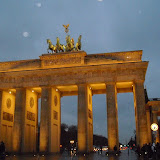
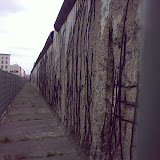
The first was little more than a teenager was 1991, I think at the beginning, and the city was little more than a year of new units. We arrived from Nuremberg to Berlin, along the former GDR on a semi-deserted streets, no houses on the sides and paved with cement. The city breathed a strange atmosphere. The streets of the West, where we slept, were glittering shop windows and people walking along the road in droves for Kudam ', the main street of West Berlin 80. I also saw the first prostitute in my life, mixed with the crowd, lured gl'adulti the light of day, to say the least in fact it was evening. The West, of course, do not hit me. Berlin was there any city of our parts, with the aggravating circumstance was not much. Except the memory of the Memorial Church, of which there is little left for other, against balanced by a modern church side, there was nothing that was worth a look. Only the wall was the attraction, was still standing and you could touch. When I saw him the first time, coming from Tiertgarten, with the Brandenburg Gate that revealed the East I was struck by the desolation. Berlin was a city crushed by history and sad. He looked like a naked old man who claims, with the last burst of dignity remained to, the look of the people. The East instead struck me because suddenly the story, which was materialized in front of the wall, I will catapult him. I remember we walked into the coach's Under der Linden, the avenue of lime trees, in utter desolation and abandonment, we arrived in front of the Palace of the Republic, shot down recently, opposite the Berlin Cathedral and Museum Island, a short walk Babel Platz, where the Nazis burned books. The ghosts of ideologies were still there and I would not be made fully into account.
The desolation was obviously the result of the escape of the Russians, in fact, I discovered later, during the GDR the population did not live badly if it were not for that "little" problem of restriction of personal freedom. This is demonstrated by the fact that once past the wall, November 9, 1898, many people did nothing more than to return home because the West does not know what to do and yet many people today the Eastern rivorrebbero DDR convinced that capitalism introduced a new system made only of debts and vices, they wanted the citizens of the East was freedom and to them was given only to buy, if they had the money.
My passage to the east was still fulminating for the first time in my life I saw not a beautiful city, not a series of palaces and museums, but to touch the living history that with the good-looking, often, little do, my eyes saw a non-Western country other than almost fascinating.
Ultimately I realized that even Berlin and Berliners were strange paths to a lifeblood that is not found anywhere else in Europe, where we live our lives beandoci of what we have and not have too many crickets in my head about matters such as "create" or "invent". The confirmation came years later.

I returned to Berlin in 1999, a friend of mine played piano for the first time in Berlin, and I follow the wave of memories of 1991. I found a site in the open. Always located in the west, along the Kudam '. West Berlin and West Berlin was always Kudam 'always Kudam'. Sbertuccianti palaces, many people in the street and prostitutes after nine at night. Nothing had changed. When I went to the wall instead, near Potzdammer Platz, I realized that things were changing. The symbol of the division block was gone, there remained a few strokes patchy. Der Mauer had become a tourist attraction. The new Berlin's city center was designed from the ashes of division and the area was coming under the aegis of the large capital and large projects. Renzo Piano designed a face ultra modern and futuristic. But Berlin was changing not only there, everything had to rebuild the east makeup to present the West as a place worthy of that and he did. I walked for a long time for places of reconstruction and fortunately in the company of an architect who let me explain the meaning of certain works, which I believe only what appeared to be eco-monsters. With him, I realized many things some of which were only confirmed to me later. For example, I recently received confirmation that the buildings of the Plan, at Potzdammer Platz, modeled on the old Bauhaus artists or projects that many buildings in the Friedrichstrasse, the street in '91 was only gray building with the boards on the windows were rebuilt along the lines of the buildings there were 900 at the beginning raped by the Third Reich, by bombs Russian / American and the DDR. In short, Berlin, the hangover after the reunification, was working to become once again the capital of Germany but also Europe, economic but also cultural. If Berlin in fact, during gl'anni division, had retained a taste for art, never an end in itself, but always in motion, let alone after he lost it. In '99 the modern art galleries mushrooming, facilities for the roads were already on the agenda and concerts, classical music only, were about twenty in the evening, not to mention that Berlin was and is also the capital of techno music.
Effervescence sensed in '91 became clear after eight years.

few years later, but I can not remember clearly whether it was 2002 or 2003 during a concert pianist of his Konzerthaus above, in the meantime made his career, landing with a friend, for the third time in Berlin After a heroic journey through Austria, with blizzard, and Germany. Those days were strange because we entered into contact with the environment of artists and bohemian Berlin that crazy people talking and eating scores of Indian philosophers who would get beat by his wife and girls who speak five languages as I speak Italian. I saw in those days in Berlin, a city to live. No longer the divided city, no longer the city that is reborn, but the city as it was before that overwhelm the story, with a melancholy look at his past, his feet are firmly anchored to his mind already and this looks to the future. I remember that in those days went to Kreuzberg, the district turkish / multiethnic for the first time, previously I had always remained on the margins, and saw the explosive power of multiculturalism, in vogue in London for charity and to some extent also in Paris, good or bad. Although there was a shock to me young Italian boy in the province, Italy is a province suit, see what, with slow and endless arguments, we would inevitably have happened. Berliners already knew and implement what was already here in Italy it was impossible. A key part of this dissertation in anthropology frolic through the streets of the districts of Mitte and emerging, not behave like a tourist, without photographing every corner, statue, building, behave almost as if I was a Berliner, gave me a strange happiness, as if I were sharing in the culture of the city, almost the same that I instill a bit 'of its sap, which I mentioned before, in my veins.

pass only five or six years and returned in 2008, again in Berlin with a comfortable air travel, no more trips to limit human, with a company of friends who use me (so to speak) as a tour guide. This time the accommodation is to the east in a house that seems to be the hideout of the Stasi in Prenzaluenberg. I immerse myself in classic sights of Berlin, with the rare capability of being able to review with other eyes, the museums and monuments in Berlin classics seen for the first time in sixteen years earlier. The Reichstag, Brandenburg Gate, the Pergamon, the Victory Column, try to see as much as possible but time is limited, and leave out a lot, which will integrate the following year. In those days the city seemed to me more relaxed, less tense, although the signs of reconstruction were still clearly visible. Palace of the GDR, I saw the first time in '91, now shaved to the ground were being crushed even the last remnants and reminders of this nation born from the follies of World War II confined in a small museum on the edge of the island of museums. The matter may seem sad but the people of Berlin can look forward without regrets.
Berlin 19-24 11 2008


And here we are in 2009, one of my fifth time in Berlin, Berlin younger as we age. Instead of building the DDR is a lawn and the house where I lodged Preazlauenberg in 2008 and where it was also turn is surrounded by construction sites. I earnestly hope that taking it is one of the increasingly rare examples of East Berlin Berlin palace
In the latter, for the moment visit, I get what was left unfinished in 2008 (Gemaldegallerie, Bauhaus, Jewish Museum, Wannsee) and I immerse myself in the city and also in the neighborhood where housing rediscovering the colors in Berlin thanks to the sun than in other visits had always been a bit 'large. Yes it may seem partridge but Berlin is also a city of colors. Colors on the houses, colors in the giant murals, color in clothes, cars, on the premises. The color and fancy free is the rule then that confirms what I said the "modus vivendi" Berlin eccentric and outgoing. In fact, Berlin is the city of the open air: open air markets, outdoor beer gardens, parks everywhere and people coming out and walks or rides his bike (you can buy a 50 euro at the beginning of the holiday and sell it to Market at the end of it Prenzaluenberg) seems to be in contact with a company pretelevisiva. The sun lit up a Berlin still different and more friendly than other times. If you think about it then I've never been in this city in the summer and maybe it was a mistake, I should have known that Berlin could have been changed by a single ray of sunshine.
Berlin 09